Water-soluble polymers are high-molecular-weight substances that dissolve or hydrate in water to form polymer solutions with specific rheological, interfacial and functional properties across diverse industries.
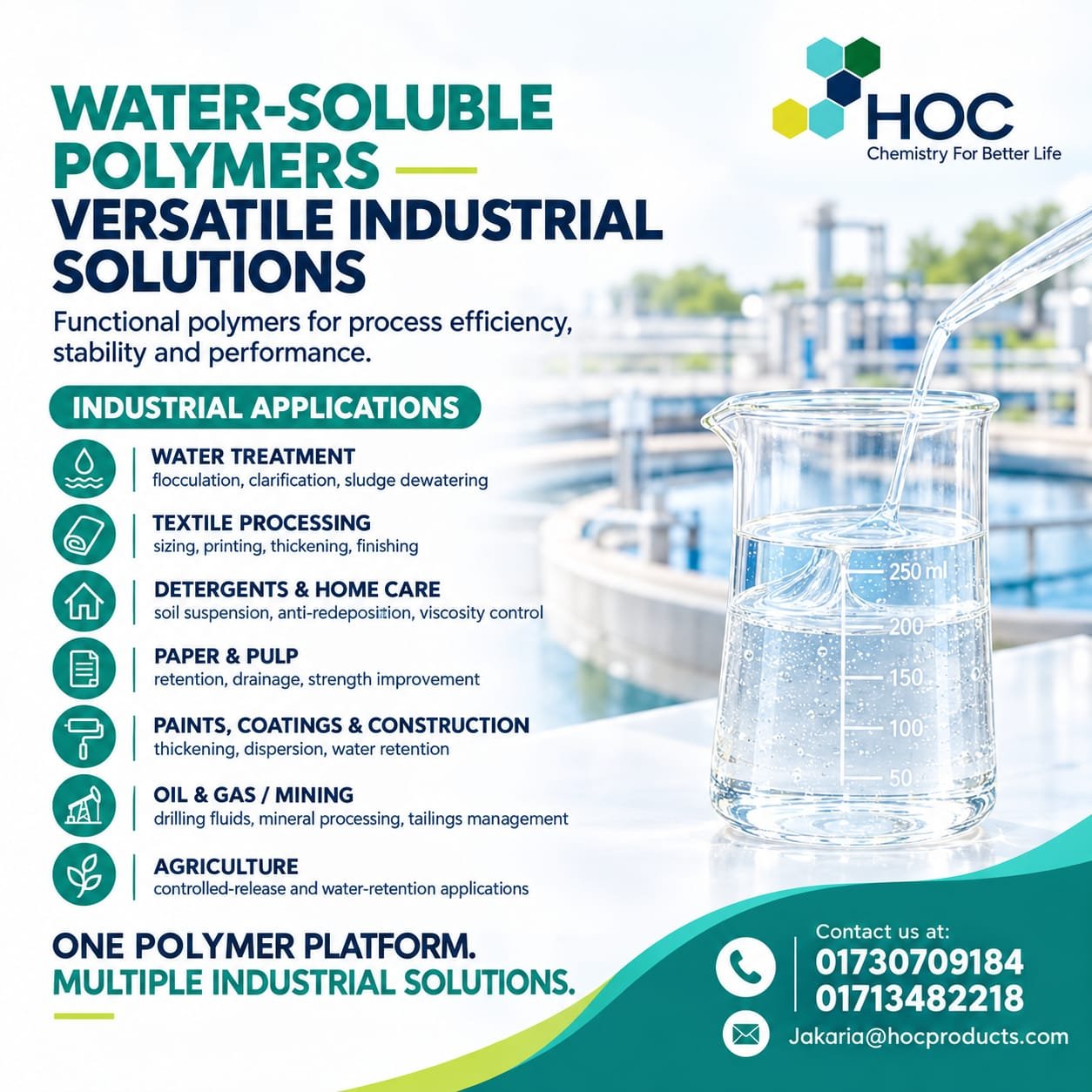
Figure 1.1: Chain architectures and functional group hydration mechanisms of water-soluble polymers.
Download InfographicIntroduction to Water-Soluble Polymers
Water-soluble polymers are high-molecular-weight substances that dissolve or hydrate in water to form polymer solutions with specific rheological, interfacial and functional properties. They play a critical role in detergent manufacturing, textile processing, industrial water treatment, paper production, paints and coatings, construction chemicals, oil and gas, and personal care formulations.
Their industrial importance arises from their ability to modify viscosity, stabilize dispersions, bind particles, control deposition, improve film formation and facilitate solid–liquid separation. Depending on their molecular structure, charge density, molecular weight and functional groups, water-soluble polymers can act as thickeners, dispersants, flocculants, binders, protective colloids, anti-redeposition agents and rheology modifiers.
1. Chemistry and Molecular Structure
The performance of a water-soluble polymer is determined by its repeating molecular units, chain architecture and interaction with water. Hydrophilic functional groups—including hydroxyl (–OH), carboxylate (–COO⁻), amide (–CONH₂), ether (–O–) and other polar groups—promote hydration through hydrogen bonding, ion–dipole interactions and electrostatic effects.
Water-soluble polymers can be broadly classified into three categories:
- Natural polymers: Starch, guar gum, xanthan gum and alginates. These are derived from biological sources and are used in thickening, binding and stabilization.
- Modified natural polymers: Carboxymethyl cellulose (CMC), hydroxyethyl cellulose (HEC) and hydroxypropyl methylcellulose (HPMC). Chemical modification improves or adjusts their solubility, rheology and application performance.
- Synthetic polymers: Polyacrylamide (PAM), polyacrylates, acrylic acid–maleic acid copolymers, polyvinyl alcohol (PVA), polyethylene glycol (PEG) and polyvinylpyrrolidone (PVP). These offer adjustable molecular weight, ionic character and functional performance for specific industrial requirements.
A key distinction is that water-soluble polymers are not all chemically equivalent. Anionic polymers contain negatively charged groups, cationic polymers carry positively charged groups, and nonionic polymers have no substantial formal ionic charge under their intended operating conditions. Their selection must reflect the chemistry of the application system.
2. Working Mechanisms of Water-Soluble Polymers
Water-soluble polymers perform their functions through several molecular mechanisms:
Viscosity modification:
Hydrated polymer chains increase resistance to flow through chain expansion, entanglement and hydrodynamic volume. This mechanism is used to control product thickness, suspension stability and application behaviour.
Particle dispersion and stabilization:
Anionic polymers can adsorb onto particle surfaces and generate electrostatic repulsion. Hydrated polymer chains can also create steric barriers that reduce particle aggregation and sedimentation.
Flocculation and bridging:
High-molecular-weight polymers can adsorb onto multiple suspended particles simultaneously, forming bridges between them. The resulting flocs are larger and easier to separate by sedimentation, flotation or filtration.
Chelation and threshold inhibition:
Certain functional polymers containing carboxylate groups interact with metal ions or mineral crystal surfaces. Depending on their chemical structure, they can inhibit crystal growth, reduce mineral deposition or help maintain dispersed solids.
Film formation and binding:
Polymers such as PVA form cohesive films after water evaporation. This property is valuable in textile sizing, paper coatings, adhesives and selected construction applications.
These mechanisms depend on polymer dosage, molecular weight, charge density, pH, temperature, electrolyte concentration and compatibility with other ingredients.
3. Applications in Textile Auxiliaries
Water-soluble polymers are widely used in textile pretreatment, dyeing, printing, finishing and effluent treatment.
- Textile sizing: Polyvinyl alcohol, modified starches and other film-forming polymers coat yarn surfaces, improve abrasion resistance and reduce fibre breakage during weaving.
- Dyeing and printing: Selected polymeric thickeners provide viscosity control, improve print-paste rheology and help limit unwanted spreading. Polymer selection depends on dye chemistry, printing technique, substrate and subsequent washing requirements.
- Dispersing and anti-deposition: Suitable acrylic and maleic-acid-based copolymers can help disperse particulate matter and reduce unwanted deposition in compatible processing systems.
- Textile wastewater treatment: Polymeric flocculants support the aggregation of suspended solids and can improve clarification and sludge dewatering. The appropriate ionic type and molecular weight depend on wastewater composition and the preceding coagulation process.
4. Applications in Detergents and Cleaning Products
In laundry detergents and household cleaning formulations, water-soluble polymers provide functions beyond conventional surfactant cleaning.
Anti-redeposition: Polymers such as carboxymethyl cellulose and selected acrylic copolymers help keep removed soil dispersed and reduce its redeposition onto fabrics.
Scale control: Selected polycarboxylates interact with mineral crystal surfaces and can inhibit crystal growth or deposition. Their effectiveness depends on water hardness, pH, builder system and polymer chemistry.
Soil dispersion: Polymeric dispersants stabilize certain particulate soils, helping prevent aggregation and supporting their removal during rinsing.
Rheology modification: Cellulose ethers and other compatible polymers can adjust viscosity, suspension properties and product stability in liquid cleaning formulations.
The final performance depends on the combined action of surfactants, builders, chelating agents, enzymes, salts and polymers. No single polymer provides all these functions equally well.
5. Industrial Water Treatment and Wastewater Management
Water-soluble polymers are essential in municipal and industrial water treatment, including textile effluent, pulp and paper wastewater, mining operations and selected process-water systems. High-molecular-weight polyacrylamide-based flocculants promote particle aggregation through polymer bridging. Depending on their ionic character, cationic polymers may also neutralize negatively charged particles, while anionic polymers can perform effectively in suitable mineral suspensions and coagulation systems.
The resulting flocs can improve settling, filtration and sludge dewatering. Performance should be optimized through jar testing and controlled dosage trials because overdosing, unsuitable charge density or poor polymer preparation can reduce treatment efficiency.
6. Applications in Paper, Coatings, Construction and Oil and Gas
In the paper industry, water-soluble polymers support retention, drainage, dry-strength development, coating and surface modification. In paints and coatings, suitable polymers contribute to rheology control, pigment dispersion, suspension stability and film properties.
In construction chemicals, cellulose ethers are used in selected cementitious and gypsum-based formulations to modify water retention, consistency and workability. In oil and gas operations, selected polymers—including partially hydrolyzed polyacrylamide—can increase aqueous-phase viscosity and improve fluid mobility control during enhanced oil recovery. Each application requires a polymer grade specifically designed for its process conditions; a polymer optimized for detergent use may not be appropriate for high-salinity water treatment or cement-based formulations.
7. Selection Criteria and Formulation Considerations
Effective polymer selection requires evaluation of molecular weight, charge density, degree of substitution, hydration rate, solution viscosity, electrolyte tolerance, pH stability and compatibility with other ingredients. Polymer addition procedures are also important: inadequate wetting, rapid addition or insufficient hydration can produce agglomerates and reduce performance.
Environmental behaviour must be assessed for the specific polymer. Water solubility does not automatically mean biodegradability or environmental safety. Polymer persistence, residual monomers, aquatic effects and wastewater-treatment performance should be considered alongside technical efficiency.
HOC Products: Application-Focused Polymer Solutions
HOC Products supports industrial customers with chemical raw materials and application-focused product selection for textile auxiliaries, detergent formulations, industrial cleaning, water treatment and related industries. The correct polymer grade, selected according to molecular structure and validated under actual operating conditions, can help improve formulation stability, process efficiency and consistent industrial performance.